


5-minute read
Equipment Sales Technical Specs: How to Turn Data Into €1M Decisions
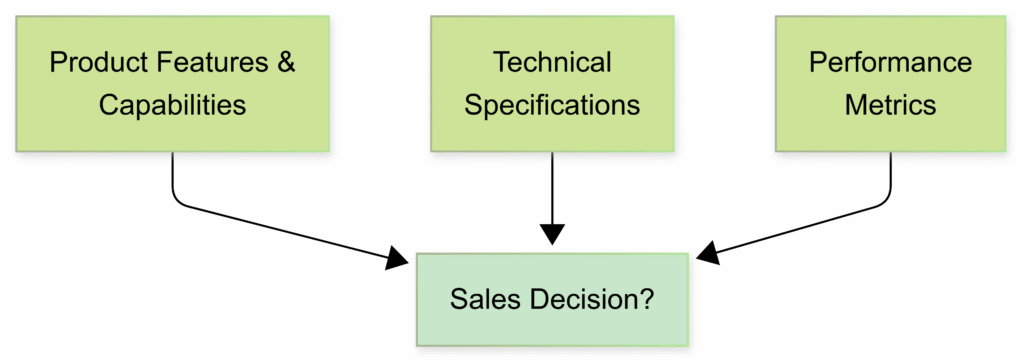
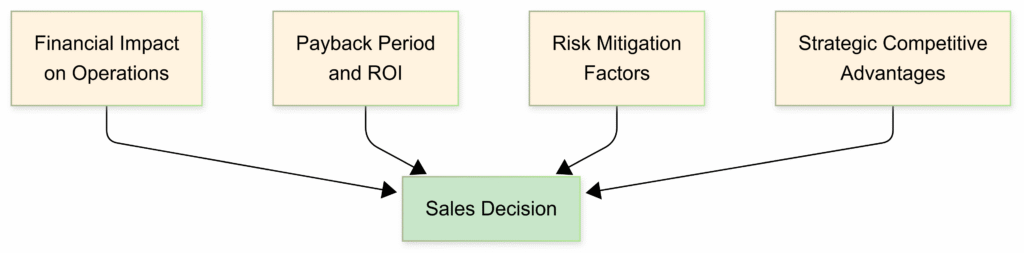
Equipment manufacturers lose millions in potential sales because they’re speaking the wrong language. While engineering teams focus on equipment sales technical specs, executives make decisions based on financial impact and operational benefits. The gap between technical specifications and business outcomes creates missed opportunities worth millions. Understanding how to bridge that gap — how to translate equipment sales technical specs into language that drives investment decisions — is one of the most underused advantages in industrial sales today.
The Reality Check
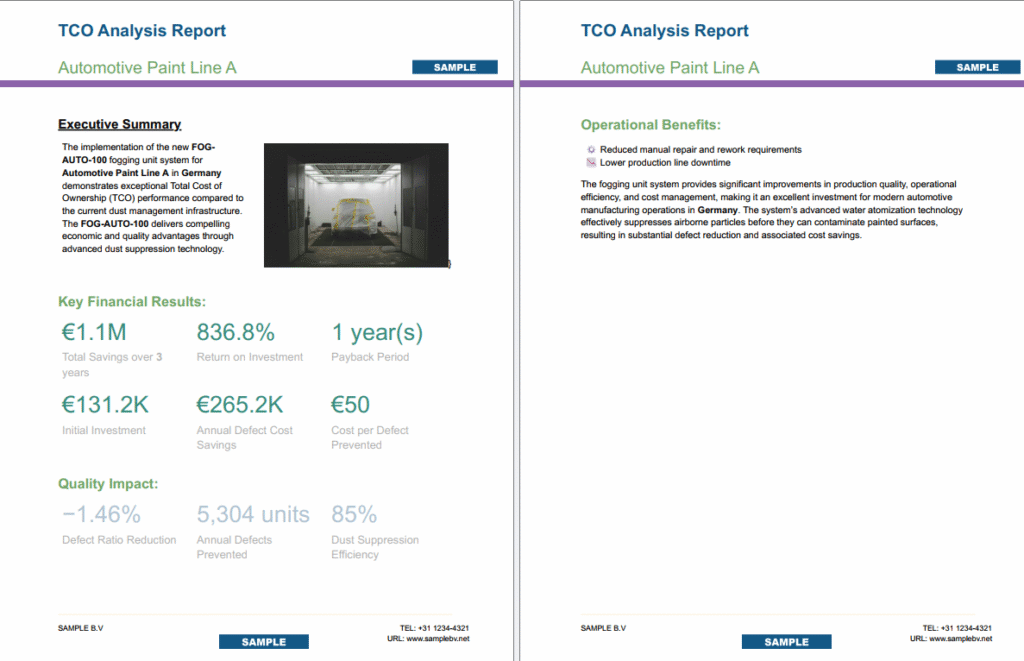
A recent automotive paint line project revealed this disconnect dramatically. The sales team initially presented a €131,200 fogging system using standard technical documentation as a “dust suppression upgrade with 85% efficiency”. The buyer saw it as an expensive item.
After comprehensive data analysis, the same equipment became a “€1.1M profit opportunity with 1-year payback.” The difference? We transformed technical data into business language that resonated with decision-makers.
What’s Really Happening
Traditional Approach:
What Executives Actually Need:
The €265,200 Annual Discovery

Our analysis revealed that ca.5,000 defective units were costing €50 or more each in materials, labor, and lost productivity. That’s €265,200 in annual waste the company had normalized as “operational reality.”
This single insight transformed the conversation from “Do we need this equipment?” to “How quickly can we implement it?”
This is the core shift that separates equipment sales professionals who consistently close from those who present and wait. When equipment sales technical specs are anchored to a quantified operational loss — one the buyer already owns — the decision is no longer about cost. It becomes a question of how long the company can afford to wait.
Converting Technical Data Into Sales Success
The most successful equipment sales professionals understand that specifications alone don’t close deals. They master the art of translating complex technical information into compelling business narratives. Consider these transformation examples:
- “99.2% uptime reliability” becomes “eliminates 29 hours of costly downtime annually”
- “15% energy efficiency improvement” translates to “€18,000 annual utility savings”
- “Advanced filtration system” transforms into “reduces maintenance costs by 40%”
None of these reframings require inventing new data. They require asking one question that most technical sales documentation never asks: what does this specification mean in euros, hours, or units for the buyer’s operation? The equipment sales technical specs remain the foundation — but the business case is what gets the meeting, and what closes it.
Why Decision-Makers Ignore Technical Specs
Procurement managers and plant directors operate under pressure to justify every capital expenditure to a finance team or board. A document that leads with throughput rates, tolerance thresholds, and system configurations forces them to do the financial translation themselves — and most won’t. The burden of proof sits with the seller, not the buyer. Equipment sales technical specs presented without a business context don’t fail because the technology is weak. They fail because the financial case was never made visible. Sales teams that understand this stop presenting specs and start presenting scenarios: here is what your operation currently costs, here is what it costs after implementation, and here is how long it takes to reach breakeven.
Key Takeaway
Every industrial operation generates valuable data that can support investment decisions. The challenge isn’t finding the equipment sales technical specs — it’s knowing how to analyze and present them for maximum business impact.
Next: Learn the exact methodology for converting raw operational metrics into powerful sales documentation.
Reference:
Solution Selling reference: https://www.pipedrive.com/en/blog/solution-selling
Harvard Business Review value selling: https://www.salesforce.com/blog/value-selling/
*The values provided are meant to be illustrative examples, not necessarily actual data points. They are used to demonstrate a concept or process, and should not be interpreted as real measurements or observations.
Related Articles
Exhibition Sales Strategy: A Field Guide for Sales and BD →
Speed Meeting Strategy: 10 Steps for Japanese Manufacturing Exhibitions →