


Industrial Sector Reports · April 2026 · 8 min read
The BIT Milan travel exhibition is one of the most energetic trade events on the European calendar. Thousands of suppliers, destinations, and travel agencies meet in one venue. Each brings their best offers, branded booths, and carefully prepared pitches. However, walking the floor without a clear plan can waste your time fast. After joining a buyer through the most recent edition, I returned with a much clearer picture. I now understand what separates productive visitors from those who leave tired, carrying brochures, and short on real leads.
This report is for travel industry buyers and market researchers. Specifically, it is for those who want to make every hour at the BIT Milan travel exhibition count — from the first speed meeting to the final post-show summary.
Why the BIT Milan Travel Exhibition Deserves Serious Preparation
BIT (Borsa Internazionale del Turismo) takes place each February at Fiera Milano. It consistently ranks among the top travel trade shows in the Mediterranean region. Countries and regions spend heavily on large, branded pavilions. Their goal is simple: capture attention and collect contacts. As a result, catering counters, live performances, and giveaways fill the halls.
For a buyer on a research mission, this creates a real tension. The same energy that makes the event exciting also drains your schedule. Therefore, attending the BIT Milan travel exhibition without a checklist is risky. Think of it like hiking without marking your waypoints. The scenery looks great, but you may never reach your target.
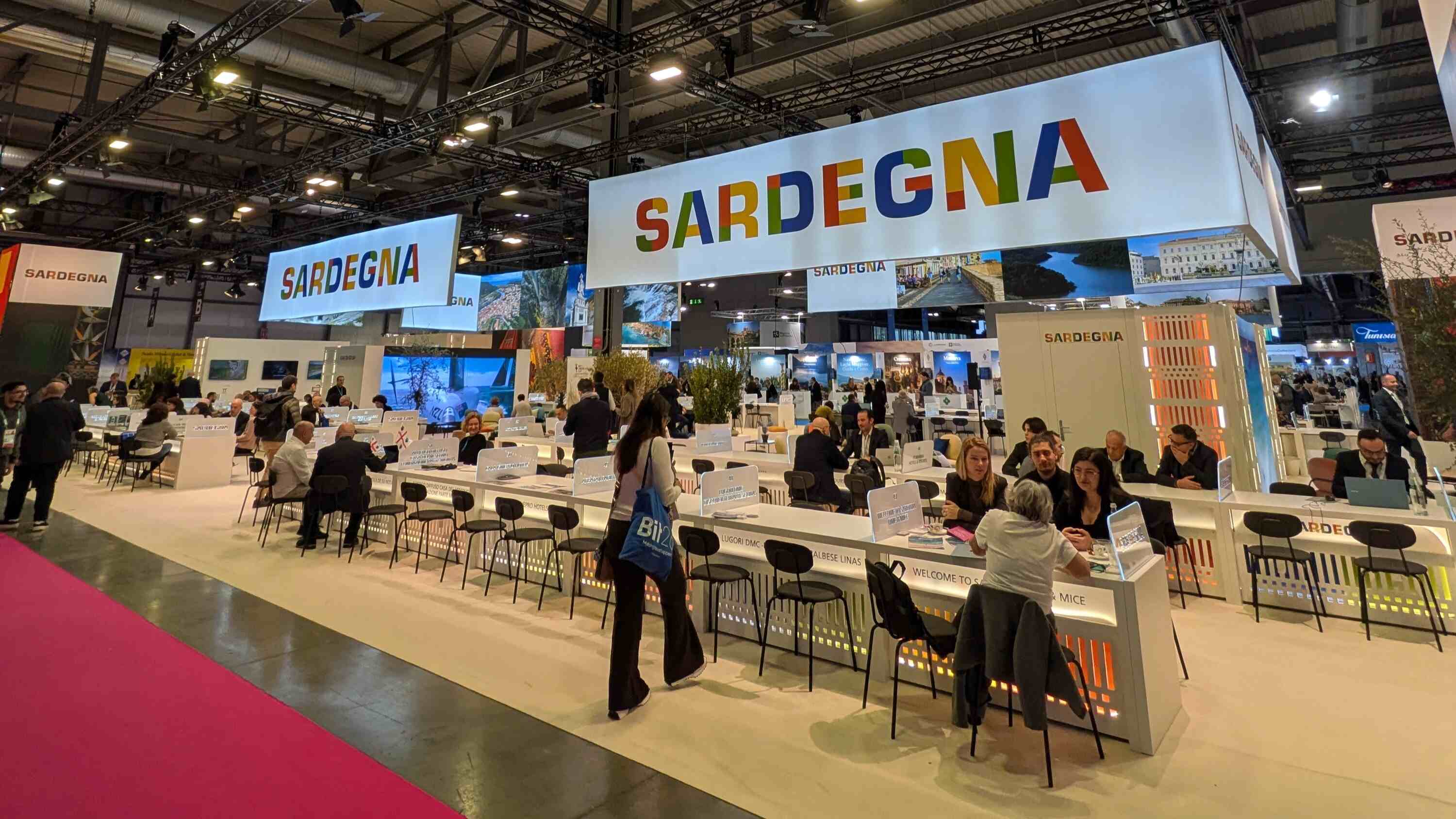
For context, see how BIT compares to other major European travel trade events. Both the
World Travel Market (WTM)
and ITB Berlin
offer useful benchmarks for exhibition scale and buyer expectations.
The Speed Meeting Zone: A Hidden Advantage at the BIT Milan Travel Exhibition
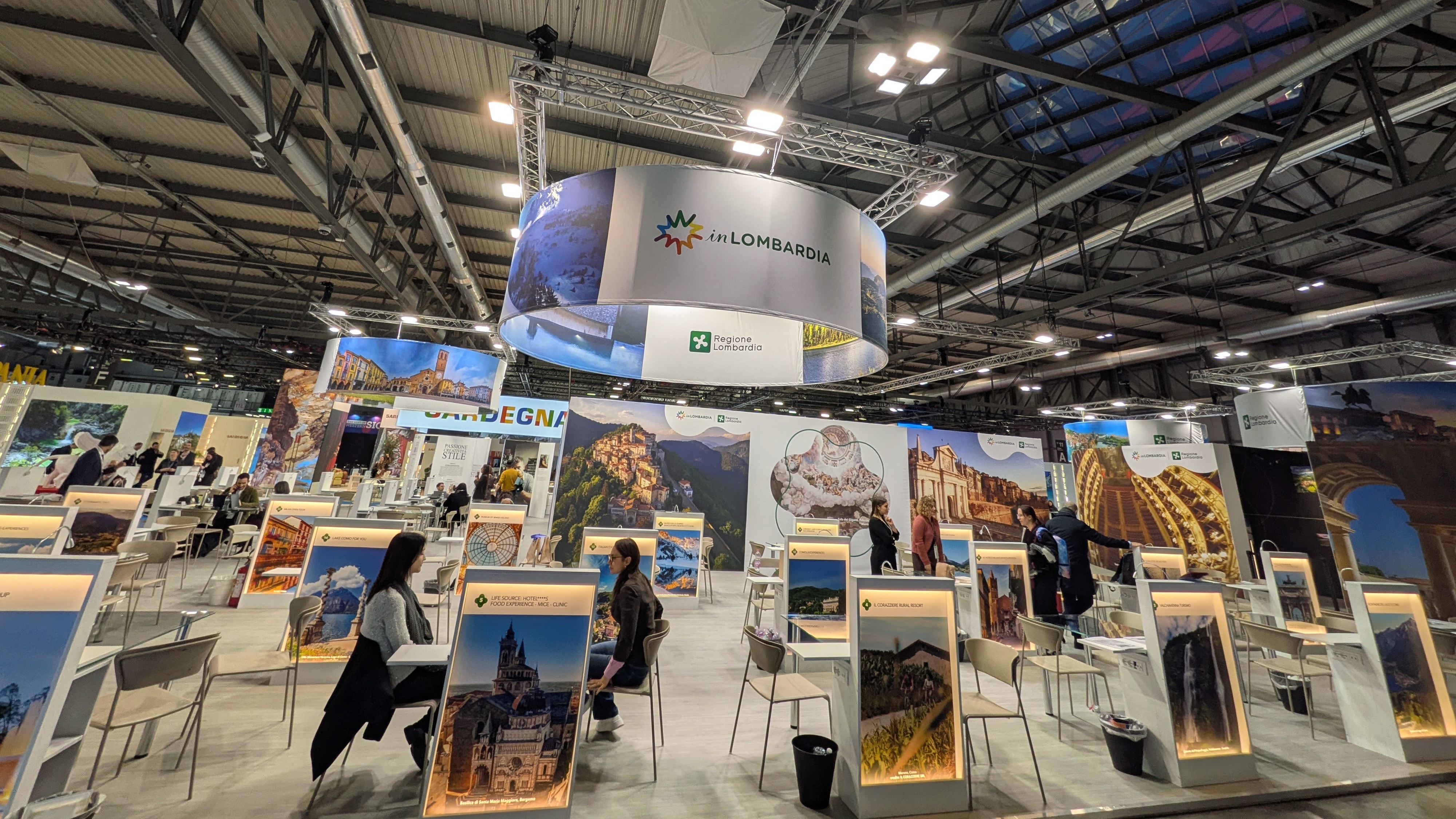
One of the most underrated features of the BIT Milan travel exhibition is the buyer speed-meeting area. These zones use clusters of small tables with refreshments. They sit away from the busy main floor. Only pre-registered agencies and suppliers with booked slots can use them. Bookings happen in advance through the official event app.
Moreover, these zones open real doors for small and mid-sized agencies. A full pavilion booth costs a lot — in design, staff, and logistics. A speed-meeting slot, by contrast, only asks for preparation and punctuality. For a small travel operator researching mid-market packages, this levels the playing field completely.
Practical Tip
Register for the buyer speed-meeting zone as early as possible. Good time slots fill fast. Use the official app to browse exhibitor profiles, filter by destination, and lock in appointments before you travel to Milan.
Furthermore, the appointment-led format changes the whole dynamic. Both parties choose to meet. So the conversation starts with shared interest, not cold selling. As a result, less time goes on general presentations. Instead, meetings move quickly to the details that matter — prices, group sizes, availability, and commissions.
What Strong Exhibitors at the BIT Milan Travel Exhibition Do Differently
Watching multiple meetings revealed one clear pattern. The suppliers who impressed buyers most did not always have the biggest booths. Instead, they came with a structured, flexible conversation — and they gave buyers a real choice.
They Present Selectable Offers, Not Just Catalogues
Strong exhibitors arrived with tiered options — entry, standard, and premium. They used simple visual aids to make comparison easy. Consequently, buyers could point to a tier and say “tell me more about this one.” That moment signals a buyer moving toward a decision.
They Ask Good Questions Early
The best meetings at the BIT Milan travel exhibition followed a clear opening pattern. First, the supplier gave a short positioning statement. Then, they asked the buyer a direct question. For example: “What group sizes do you usually work with?” or “Do you focus on leisure, corporate, or mixed travel?” This approach shows the supplier is listening. In turn, buyers respond with more openness and trust.
Common Pain Points That Hurt Buyer Performance
Watch Out For These Patterns
Even experienced buyers fall into these traps at large events like the BIT Milan travel exhibition.
Booth drift. Without a priority list, you can easily spend two hours inside one pavilion’s entertainment area. You leave with a tote bag and no useful leads.
Data collection traps. Some exhibitors care more about building contact lists than doing real business. You can spot them early. They ask for your business card straight away and offer vague follow-up promises. When you see this, exit politely and move on.
No scoring system. If you have no way to compare offers during meetings, everything blurs together afterward. As a result, the report you write for your team becomes hard to defend or act on.
Heavy reporting work after the event. Notes on twenty-plus suppliers need time and structure to become a useful internal document. Many buyers skip this step. Consequently, the knowledge they gathered on the floor quickly loses its value.
How a Well-Prepared Buyer Navigates the BIT Milan Travel Exhibition
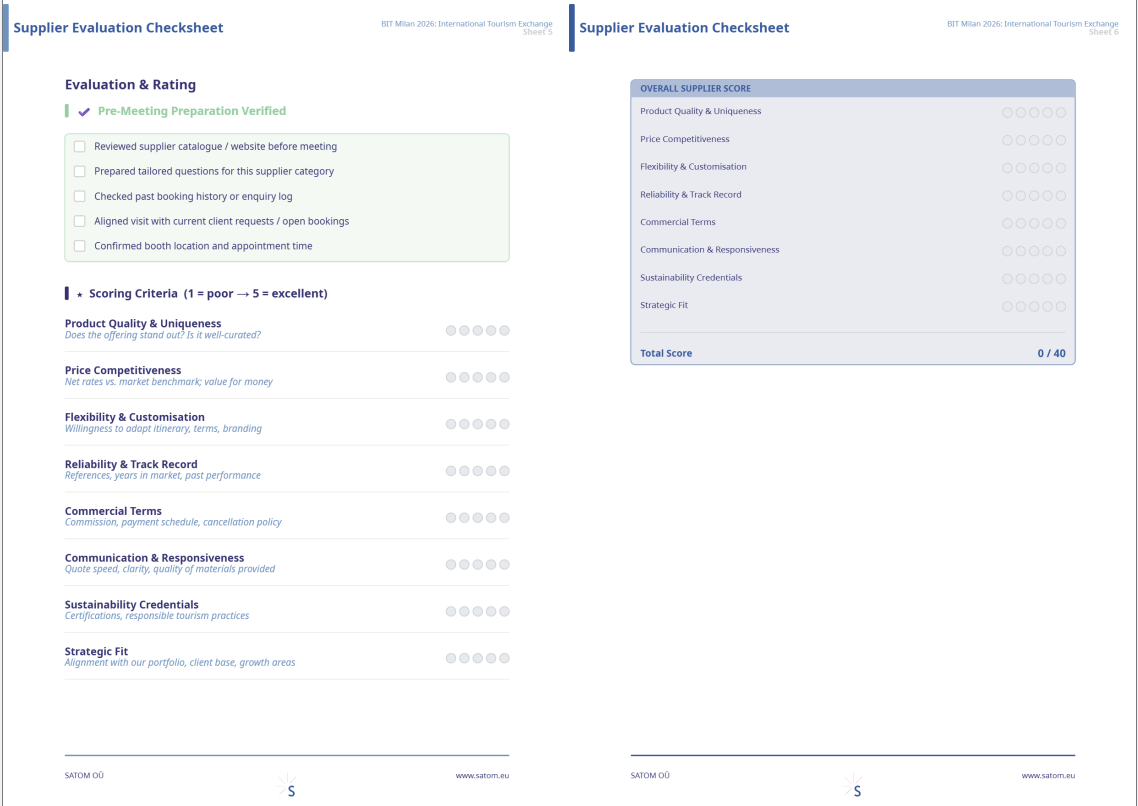
The buyer I joined during this edition of the BIT Milan travel exhibition showed a practical model. Before arriving, they finished three key tasks. First, they built a priority schedule of appointments sorted by strategic fit. Second, they prepared an evaluation checklist with clear scoring criteria. Third, they wrote a short list of tailored questions for each supplier type.
During each meeting, the checklist worked as a quiet guide. The conversation stayed natural. At the same time, the buyer captured every key detail — price structure, minimum group size, flexibility, and quote response time. At the end of each session, they assigned a quick score while the details were still fresh.
By the end of the day, they held a set of structured, comparable records. Not a pile of leaflets. This approach mirrors a core principle from long-distance hiking: prepare your route before you walk it. Then you can stay fully present on the trail.
How SATOM Supports Buyers Before, During, and After the Exhibition
This is exactly where SATOM adds practical value. Most buyers return from the BIT Milan travel exhibition with raw notes. Those notes then take hours to process. In contrast, buyers who use SATOM’s framework arrive with a ready-made recording format. They leave with a report that is ready to share.
Step 1 — Pre-Exhibition Setup
SATOM builds a custom evaluation sheet based on your research goals. Criteria are weighted and designed for fast, consistent capture during live meetings.
Step 2 — During the Exhibition
The sheet turns personal impressions into numeric scores. Each supplier gets rated against the same criteria. This makes post-event comparison straightforward and objective.
Step 3 — Post-Exhibition Reporting
SATOM converts your completed sheets into a clean exhibition summary. The report is structured, professional, and ready to send to your team or stakeholders by email.
Additionally, buyers who attend several exhibitions per year build a growing supplier database over time. Each event adds more data. As a result, the value of the system increases with every visit.
Key Takeaways for Your Next Visit
- First, register for the buyer speed-meeting zone early and pre-book key appointments via the app.
- Next, set your evaluation criteria before the event — not during or after.
- Then, focus on suppliers who offer tiered options and open with real qualifying questions.
- Also, spot and exit low-value interactions quickly. Your time is your scarcest resource.
- Finally, plan your reporting format in advance so your field notes become shareable output without extra work.
In short, the BIT Milan travel exhibition rewards those who prepare. The event is designed to engage, impress, and occasionally distract. However, buyers who arrive with clear goals and the right tools find it one of the most efficient places in Europe. You can gather market intelligence, compare mid-size travel plans, and build supplier relationships that last long after February ends.
Further Reading and Resources
- BIT Milan Official Website — exhibitor lists, buyer registration, and programme schedules
- UNWTO Tourism Statistics — macro travel market data to support supplier evaluation
- ITB Berlin — a key reference for European travel trade exhibitions
- World Travel Market (WTM) — a further benchmark for buyer and exhibitor expectations