


Table of Contents
Why a Shiny App for Food Events Outperforms Generic Solutions
A dedicated Shiny App for food events changes everything when your digital POS app fails exactly when you need it most. Food festivals, outdoor markets, and pop-up events create challenging environments where technology either delivers or becomes useless equipment taking up valuable space. Generic cloud-based POS systems are built for permanent restaurants — not for the unpredictable reality of outdoor food service events.
The promise of digital transformation in food service is compelling. Cloud-based systems, mobile apps, and integrated platforms offer sophisticated features that work beautifully in controlled restaurant environments. However, temporary outdoor events present entirely different challenges that render many solutions impractical or completely non-functional. A purpose-built Shiny App for food events addresses these gaps directly.
Understanding why technology fails at outdoor food service events — and what a reliable POS app actually requires — helps vendors make informed decisions about operational tools. You can also explore our full range of food event solutions to see how each tool fits different operational contexts.
Real-World Conditions at Outdoor Food Events
A Shiny App for food events must perform under conditions that office-based testing cannot simulate. Several environmental and operational factors combine to create a uniquely challenging deployment environment for any POS app used outdoors.
Unreliable Internet Connectivity
When hundreds of people gather in a concentrated outdoor area, WiFi infrastructure struggles. Festival attendees stream social media, check emails, and browse websites. Consequently, this congestion overwhelms available bandwidth. POS app systems that rely on constant cloud connectivity slow to a crawl or become completely unusable precisely when transaction volume peaks.
According to event technology studies, up to 60% of outdoor events experience significant connectivity issues during peak attendance periods. Therefore, any Shiny App for food events must account for this reality with a strong offline-first architecture.
Environmental Stress Factors
Outdoor conditions challenge both equipment and operators. Bright sunlight creates screen glare that makes dim displays unreadable. Rain threatens unprotected electronics. Dust and food particles contaminate keyboards and touchscreens. Temperature extremes affect battery performance and system stability. A well-designed Shiny App for food events accounts for all of these physical stressors in its interface and architecture.
Operator Stress and Limited Training
Many outdoor food events rely on volunteer staff or seasonal workers with minimal technical training. These operators face time pressure, customer stress, and physical fatigue. Technology that requires extensive training or complicated POS app workflows fails under these conditions. Interface design must accommodate reduced cognitive capacity during high-stress service periods.
Budget Constraints
Permanent restaurants can justify significant technology investments through daily use over years. Temporary events or occasional vendors cannot. A Shiny App for food events must deliver value without requiring capital expenditures that only make sense for permanent operations. Learn more about budgeting for small food businesses.
Variable Hardware Availability
Outdoor vendors typically use whatever devices they have available — personal laptops, older tablets, or borrowed equipment. POS app solutions that require specific hardware models or recent specifications create barriers to adoption. A flexible Shiny App for food events deploys across a wide range of devices, broadening accessibility for all operators.
Case Study: Piedmont BBQ Festival POS App Deployment
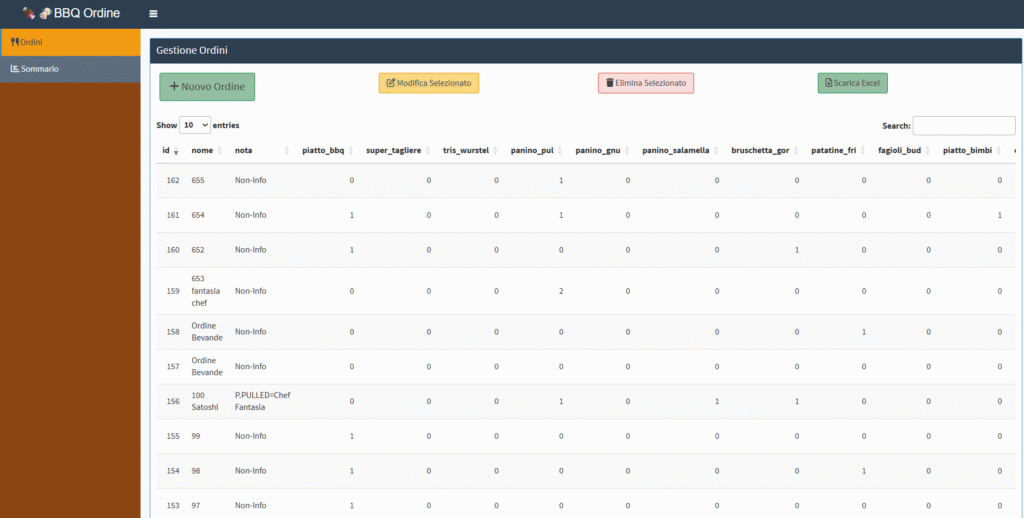
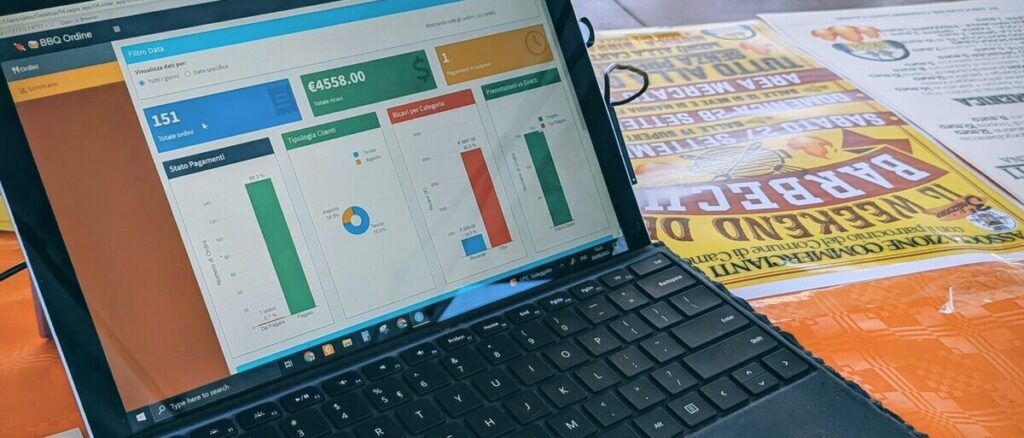
We recently deployed a Shiny App for food events at a BBQ festival in Piedmont, facing all the challenges described above. This real-world POS app implementation provided practical insights into what works under genuine field conditions.
Environmental Challenges at This Event
The festival occurred outdoors with hundreds of attendees concentrated in a small area. WiFi connectivity proved unstable throughout the weekend, with periodic complete outages during peak dinner hours. Staff included volunteers with varying technical comfort levels operating under time pressure. The organizing committee had zero budget for expensive enterprise POS solutions.
Design Principles for a Reliable Shiny App for Food Events
Our approach prioritized reliability over feature richness, acknowledging that sophisticated POS app capabilities mean nothing if the system is unavailable when needed. Every design decision in this Shiny App for food events reflects real field conditions rather than ideal lab environments.
Lightweight Code Design
The POS app is built with minimal resource requirements, ensuring fast performance even on older devices with limited memory. This design philosophy enables deployment on whatever hardware vendors have available rather than requiring expensive new equipment purchases.
Studies on mobile app performance show that load time directly impacts user satisfaction and task completion rates. At food service events where every second matters, a lightweight Shiny App for food events delivers measurable operational advantages over bloated alternatives.
Intuitive POS App User Interface
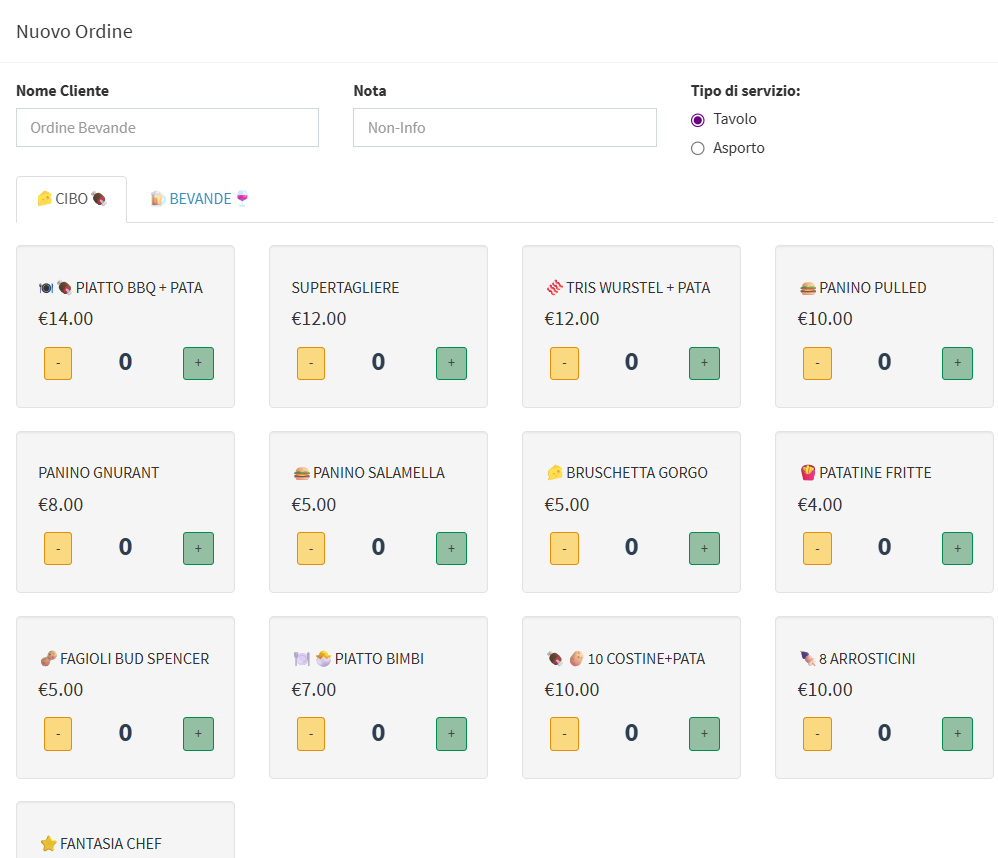
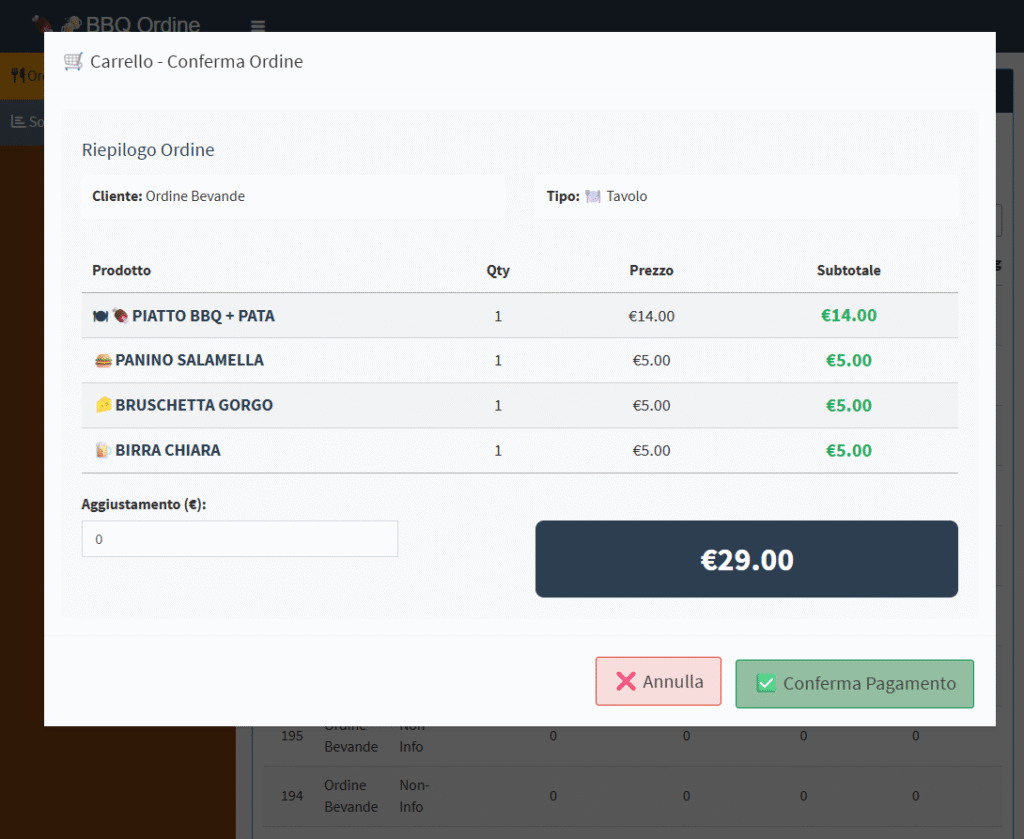
Interface design in this Shiny App for food events emphasizes clarity over complexity. Large buttons accommodate touch input under stress. High contrast ensures readability in bright sunlight. Clear confirmation dialogs prevent accidental actions. Minimal training enables volunteers to become productive quickly — a critical advantage in food event settings.
Research on user interface design for high-stress environments demonstrates that simplified interfaces improve accuracy and reduce operator stress compared to feature-rich POS app alternatives that demand higher cognitive loads.
Flexible Deployment Options
The Shiny App for food events works on both laptops and tablets, providing flexibility based on available equipment, space constraints, and operator preferences. This hardware-agnostic POS app approach eliminates procurement barriers for small operators and volunteer organizations.
Proven Results Under Field Conditions
The Shiny App for food events deployed at the BBQ festival delivered reliable POS app performance throughout the event despite all challenging conditions.
Transaction Processing Success
The POS app successfully processed 151 orders totaling €4,558 without system failures, calculation errors, or connectivity-related delays.
Operational Continuity
The Shiny App for food events maintained full functionality during WiFi outages that would have disabled cloud-dependent POS app alternatives.
Volunteer Effectiveness
Staff with minimal technical background became productive POS app operators within minutes, demonstrating the value of the intuitive interface design built into this Shiny App for food events.
Data Integrity
Complete transaction records remained secure on local storage throughout the event, with successful post-event export for analysis and accounting — a key advantage of an offline-capable Shiny App for food events.
Current Limitations and Transparency
While this Shiny App for food events delivered reliable POS app performance for its designed use case, it is important to understand current limitations. Technology for outdoor food service must match realistic requirements rather than overpromising capabilities.
No Card Payment Integration
The POS app does not currently integrate with payment processors like Visa, PayPal, or other card services. Instead, it focuses exclusively on order management and sales tracking. Vendors handle actual payment processing separately through traditional card readers or cash transactions. This separation keeps the Shiny App for food events simple while avoiding the costs and compliance requirements associated with payment processing integration. For guidance on accepting payments at outdoor events, external payment processing resources are available.
Not a Full POS Replacement
This Shiny App for food events is not a comprehensive point-of-sale system with inventory management, employee scheduling, accounting integration, and other restaurant management features. It is specifically designed for order management at temporary food service events. Permanent restaurants need more sophisticated POS platforms. Resources on choosing restaurant POS systems can help identify appropriate solutions for different contexts.
Who Benefits from This Shiny App for Food Events
A Shiny App for food events designed with these principles serves specific operation types particularly well. If your setup matches any of the profiles below, a purpose-built POS app is worth exploring.
Sagra and Food Festival Organizers
Traditional Italian festivals and similar community food events benefit from an affordable, reliable Shiny App for food events that volunteers can operate effectively without extensive training.
Food Truck Operators at Events
Mobile vendors participating in multi-vendor festivals and markets need a POS app that works across varying locations and connectivity conditions without requiring permanent infrastructure.
Pop-Up Restaurant Managers
Temporary dining concepts testing markets or operating seasonal locations require a flexible Shiny App for food events without long-term technology commitments or subscriptions.
Outdoor Catering Services
Event catering operations working in parks, outdoor venues, and temporary locations benefit from a POS app that accommodates unpredictable environmental conditions with ease.
Community Event Coordinators
Volunteer-run operations with minimal budgets need a professional Shiny App for food events that delivers results without enterprise costs or complexity.
Future Development Roadmap
Based on field experience and operator feedback, we are developing enhanced features for version 2.0 of our Shiny App for food events.
Configuration Panel for Inventory Control
A planned admin interface will allow POS app operators to mark items as sold out or unavailable without modifying underlying code. This feature addresses one of the most common operational needs identified during field testing.
Quick-Add Menu Functionality
Future versions of this Shiny App for food events will enable kitchen staff to add improvised menu items during service without requiring programming knowledge, supporting waste reduction through creative use of available ingredients.
Enhanced Offline Mode
While the current POS app functions offline, improvements will optimize offline performance further and provide clearer status indicators about connectivity conditions — a top request from food event operators.
Multi-Cashier Security
For larger operations requiring multiple simultaneous operators, we are developing authentication and access control features to maintain data security and accountability within the Shiny App for food events.
Mobile Device Optimization
Current mobile device support will be enhanced with interfaces specifically designed for smartphone screens, enabling even more flexible POS app deployment options at food events of all sizes.
Making Informed Technology Decisions
When evaluating a Shiny App for food events, consider how solutions perform under realistic stress conditions rather than ideal circumstances. Ask vendors about offline functionality, hardware flexibility, training requirements, and total cost of ownership including subscriptions and transaction fees.
Calculating the Value of Reliability
Calculate the real value of a reliable POS app. How much revenue do you lose when systems fail during peak hours? What does customer frustration cost in terms of reputation and repeat business? How much operator stress contributes to turnover and errors? A purpose-built Shiny App for food events pays for itself the first time it stays online when competitors’ systems go dark.
Taking Action
If you operate food service at festivals, outdoor markets, or temporary events, explore a Shiny App for food events specifically designed for your unique challenges. Visit our contact page to discuss your operational requirements with our team.