


Table of Contents
Real-Time Sales Analytics Transform Food Service Decision-Making
Have you ever run out of your best-selling item while still preparing dishes nobody ordered? This common scenario costs food vendors thousands in lost revenue and wasted inventory. The root cause is simple: operating without real-time sales analytics for food service events.
Traditional food service operations at festivals and temporary events rely on intuition and post-event analysis. By the time you review yesterday’s sales data, opportunities for optimisation have passed. Real-time sales analytics for food service events change this dynamic entirely, enabling data-driven decisions while events are still in progress.
The Problem: Flying Blind During Peak Operations
Consider a typical scenario at food festivals. It’s noon on Sunday — peak Sunday Roast rush. Long queues of hungry customers wait impatiently. Your signature dish sold out an hour ago, but you have twenty portions of a slow-moving item still sitting ready.
Without real-time sales analytics, you cannot identify this mismatch until after closing. Tomorrow, you might adjust, but tonight’s revenue opportunity is already lost. Customers leave disappointed. Food waste increases. Your profitability suffers.
According to National Restaurant Association research, food service operations that implement data analytics see average revenue increases of 5–15% through better inventory management and demand forecasting. The impact multiplies at temporary events where adjustment windows are measured in hours, not weeks. Our own work in sales and procurement reporting confirms that live data access is consistently the single biggest operational lever available to event organisers.
Implementing Live Sales Dashboards
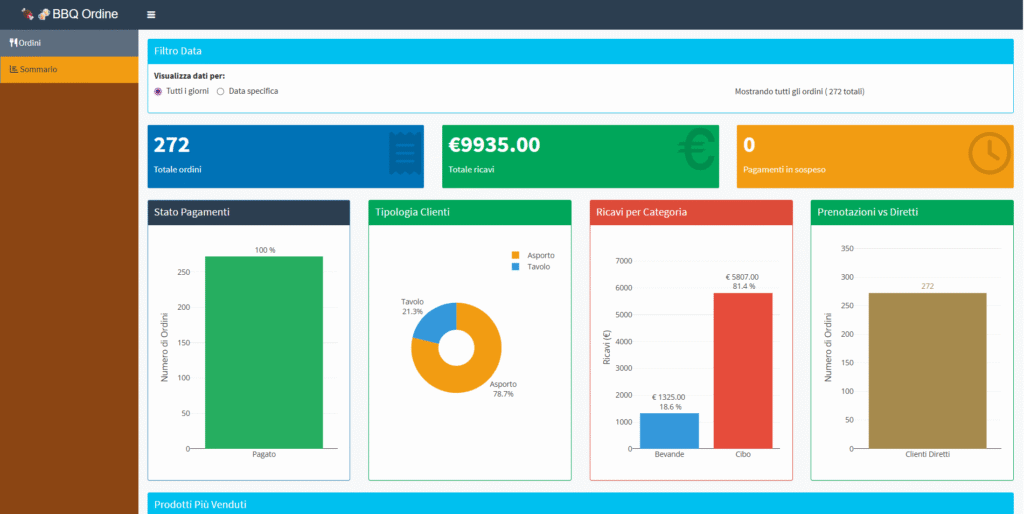
We recently deployed real-time sales analytics for a BBQ festival in Piedmont. The system provided instant visibility into operational performance throughout the entire event.
Immediate Sales Visibility
The dashboard displays current sales totals, updated with each transaction. Organisers can see exactly how much revenue has been generated at any moment. This transparency helps manage cash flow, coordinate with suppliers, and make staffing decisions based on actual demand rather than estimates.
Visual Order Type Breakdown
Charts show the split between dine-in and takeaway orders in real time. This distinction matters for operational planning. High takeaway volumes may indicate inadequate seating, suggesting adjustments for future events. Strong dine-in performance validates investments in customer comfort and ambiance. Understanding this balance helps optimise the customer experience. Read more about customer experience optimisation in food service.
Item-Level Performance Tracking
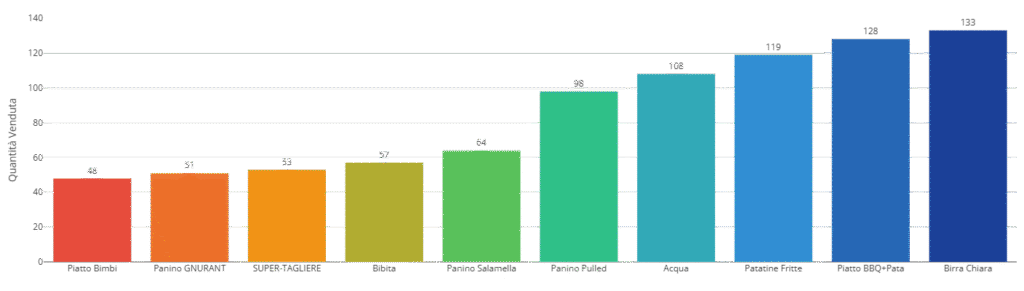
The most valuable feature of real-time sales analytics is item-by-item visibility. The dashboard shows which menu items are selling quickly, which are moving slowly, and which have stopped selling entirely. This granular data enables immediate tactical responses that manual tracking simply cannot support.
Real Impact: Data-Driven Pivots During Service
At the BBQ festival, real-time sales analytics for food service enabled critical mid-event decisions that manual tracking could never support.
Identifying Slow-Moving Inventory
By early evening, the dashboard clearly showed certain items underperforming expectations. Rather than preparing more portions of these dishes, the kitchen team could see the problem immediately and respond proactively — a decisive advantage only live data can provide.
Creating Adaptive Menu Solutions
Armed with live data, the kitchen team improvised. They created new dishes using ingredients from slow-moving items, effectively transforming potential waste into fresh offerings. This flexibility was only possible because they could see the data in real time, not days later when analysing paper receipts.
Preventing Stockouts of Popular Items
The analytics also identified which items were selling faster than anticipated. This early warning allowed the team to prioritise preparation of high-demand dishes, reducing the likelihood of disappointing sold-out scenarios during peak hours.
Measurable Results from Real-Time Analytics
The implementation delivered concrete improvements across multiple dimensions:
Reduced Food Waste: By identifying slow-moving items during service rather than after, the team minimised waste through ingredient repurposing and preparation adjustments. Food waste reduction directly improves profitability while supporting environmental sustainability goals.
Revenue Maximisation: Real-time visibility into inventory levels and sales velocity helped maximise revenue from available stock. Popular items received preparation priority, ensuring strong sellers remained available throughout peak periods.
Improved Customer Satisfaction: Fewer instances of “sold out” disappointments improved the overall customer experience. Real-time sales analytics helped maintain better inventory balance, ensuring popular choices remained available longer into the event.
Actionable Post-Event Insights: Beyond immediate operational benefits, the complete sales dataset provides invaluable planning data for future events. Historical patterns, peak demand times, and item popularity inform inventory purchasing, staffing levels, and menu planning decisions. This connects directly with broader procurement and reporting strategy — turning event data into long-term operational intelligence.
Practical Considerations for Food Service Analytics
Our real-time sales analytics solution is designed specifically for temporary events, small-scale operations, and budget-conscious organisers. Several factors differentiate this approach from traditional restaurant point-of-sale systems.
No Monthly Subscription Fees
Many POS systems require ongoing subscription costs that make sense for permanent restaurants but not for occasional events. This solution eliminates recurring fees, making professional analytics accessible to volunteer-run festivals and occasional vendors alike.
Local Data Storage
The system operates with local storage rather than cloud databases. This design decision provides two key benefits: reduced dependency on reliable internet connectivity at outdoor venues, and elimination of ongoing hosting costs. While this approach means the system is not currently integrated with remote servers, it ensures reliable operation in challenging environments.
No Payment Processing Integration
Currently, the analytics system does not integrate with card payment processors. It focuses exclusively on order management and sales tracking. Vendors handle actual payment processing separately, keeping the system simple and avoiding the complexity of payment compliance. For more information on payment processing options for food vendors, external resources are available.
Hardware Flexibility
The system runs on standard laptops or tablets without requiring specialised hardware. Food vendors can use equipment they already own, eliminating capital expenditure barriers to adoption.
Current System Features
The real-time sales analytics platform includes several features designed for practical food service environments:
Order Summary Tables: Complex orders display in clear summary format before final confirmation, reducing errors and improving accuracy under pressure.
Instant Data Export: Export complete sales data to Excel format at any time during or after the event for analysis, sharing, or accounting purposes.
Visual Analytics: Charts and graphs provide intuitive understanding of sales patterns without requiring technical expertise from your team.
Date Filtering: For multi-day events, filter analytics by specific dates to understand day-to-day performance variations and spot emerging trends early.
Readable Interface: Large fonts and high-contrast design ensure the dashboard remains readable in outdoor lighting conditions and high-stress environments.
Who Should Consider Real-Time Sales Analytics?
Real-time sales analytics for food service events deliver measurable value across a range of operations:
Festival and Sagra Organisers: Traditional food festivals benefit from professional analytics that inform both current event operations and future planning cycles.
Food Truck Operators: Mobile vendors at multi-vendor events gain competitive advantages through better understanding of sales patterns and customer preferences.
Pop-Up Restaurant Managers: Temporary dining concepts can test menu items and operational approaches with data-driven feedback before committing to permanent locations.
Catering Service Managers: High-volume catering operations improve efficiency and reduce waste through real-time visibility into order patterns and item popularity.
Community Event Coordinators: Volunteer-run events achieve professional results with tools that provide visibility and accountability without requiring technical expertise.
Taking the Next Step
Consider how real-time visibility would change your operations. Calculate the value of reducing food waste by 20%. Estimate the revenue increase from avoiding stockouts of popular items. Factor in improved customer satisfaction when you can make data-driven adjustments during service — not the morning after.
If you operate food service at temporary events, festivals, or outdoor venues, explore how real-time sales analytics can improve your results. Visit our contact page to discuss your specific event needs.