


Building a strong operational data business case is the most reliable way to bridge the gap between equipment capabilities and measurable business impact. Manufacturers who master this process convert raw performance metrics into compelling investment justifications that accelerate deal closure and drive stakeholder alignment. This guide walks you through the exact framework used to transform operational data into decisions.
Table of Contents
What Operational Data Business Case Components Actually Matter
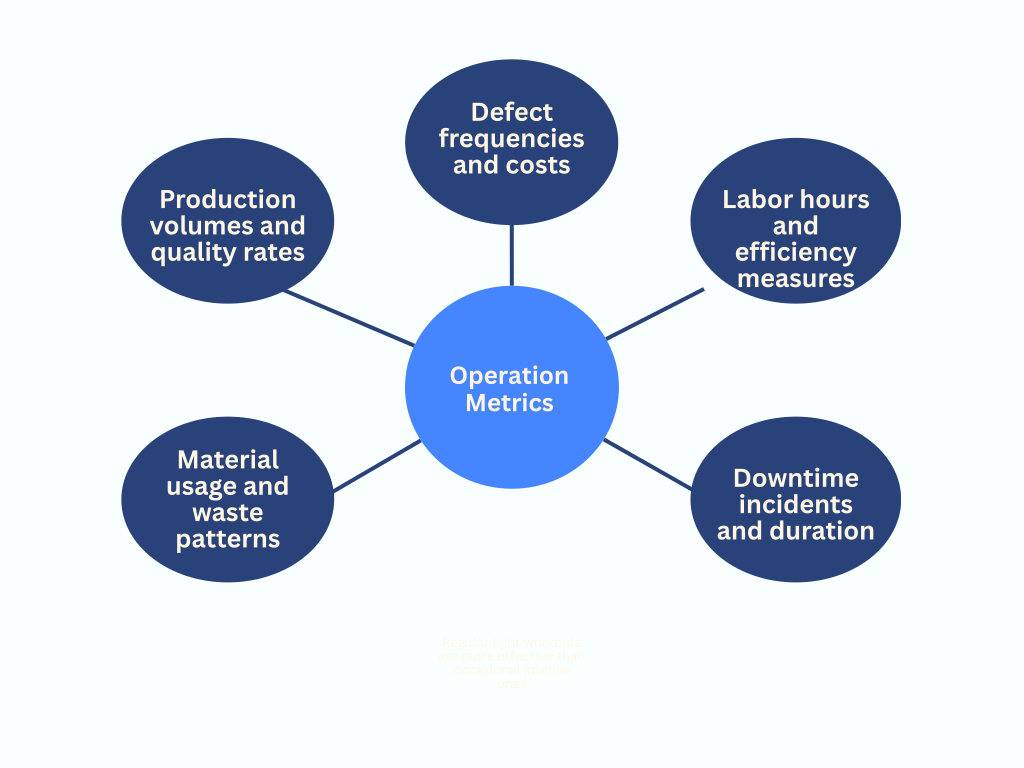
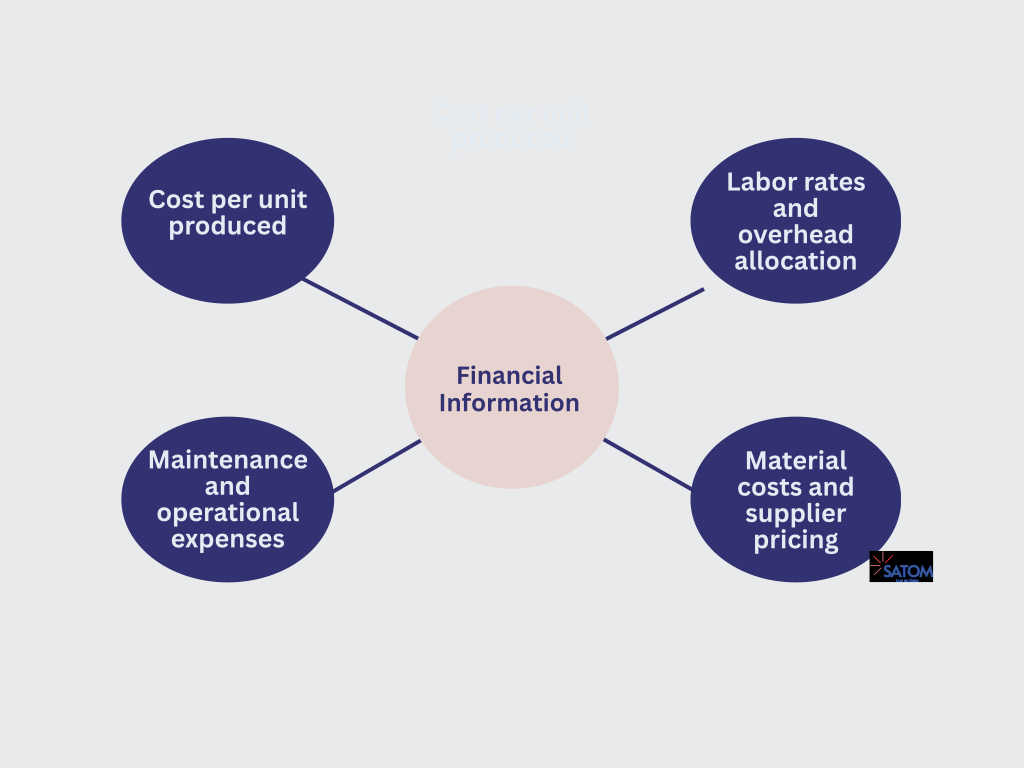
To build a compelling operational data business case, you must first understand which metrics truly influence decision-makers. Successful cases rely on two fundamental categories of information.
Operational Metrics That Drive Decisions:
Financial Information That Closes Deals:
The 3-Step Transformation Process for Building Your Operational Data Business Case
Once you understand the essential data components, the next step involves systematically organizing this information into a persuasive narrative. The following three-step process transforms raw operational data into compelling business cases that move stakeholders to action.
Step 1: Current State Analysis
First, document existing performance with precision. For example, in our automotive case:
- 5,000 annual defective units
- €50 cost per defective unit
- €265,200 annual impact from quality issues
Step 2: Impact Modeling
Next, calculate the financial effect of proposed improvements. A well-structured operational data business case quantifies every improvement area:
- 85% dust suppression efficiency improvement
- 1.46% defect ratio reduction
- Quantified savings across multiple operational areas
Step 3: Investment Justification
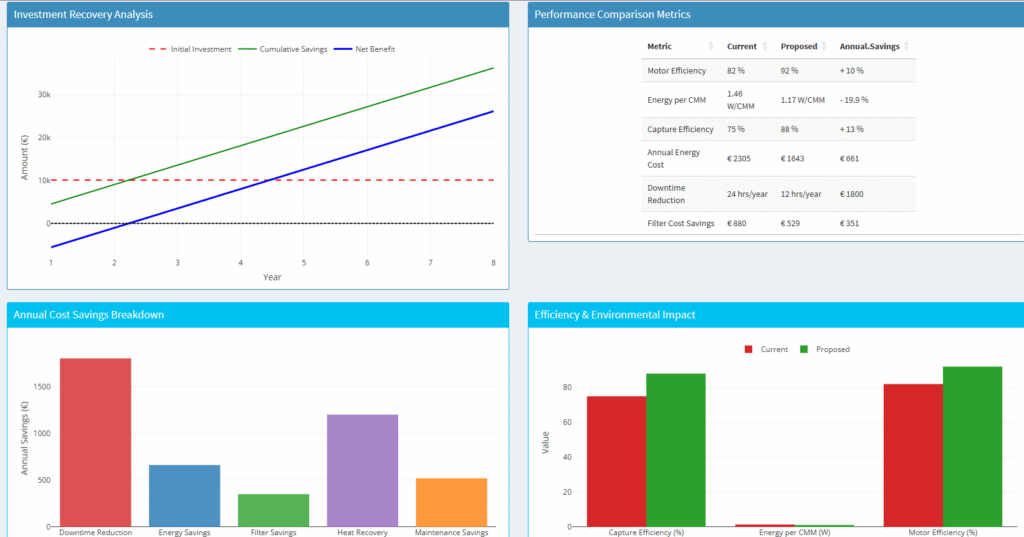
Finally, present compelling financial metrics that make approval straightforward:
- €131,200 initial investment
- 1-year payback period
- 836.8% ROI over 3 years
- €1.1M total financial benefit
According to Harvard Business Review, investment proposals that pair quantified operational improvements with clear financial outcomes are significantly more likely to receive executive approval. Similarly, McKinsey research on operational reinvention confirms that data-driven business cases reduce internal decision cycles by up to 30%.
Strategic Positioning Framework for Operational Data Business Case Development
While financial metrics are crucial, successful operational data business cases extend beyond simple cost justification. They position investments within a broader strategic context that resonates with stakeholders at every level.
Beyond Cost Justification:
- Quality Excellence: Enhanced market positioning and customer satisfaction
- Operational Resilience: Reduced risks and improved reliability
- Future-Ready Technology: Preparation for evolving industry requirements
Risk Mitigation Messaging: Effective business cases address potential concerns proactively. For a deeper look at how risk framing affects investment decisions, see our related guide on ROI calculation for industrial equipment.
- Extended warranty coverage reduces maintenance risks
- Proven technology in similar applications
- Quality assurance meeting industry standards
- Protection against rising operational expenses
The Consultative Approach to Presentation
Even with robust data and strategic positioning, the most compelling operational data business cases emerge from a deep understanding of your client’s unique situation. Adopting a consultative approach becomes essential for long-term success.
Understanding Client Context: Focus on gathering comprehensive insights about:
- Industry-specific challenges and requirements
- Operational constraints and priorities
- Decision-making factors and stakeholder concerns
Customized Analysis Framework: Develop tailored analysis that addresses:
- Relevant operational metrics identification
- Industry benchmarking and competitive analysis
- Implementation considerations and timeline factors
Measuring Success in Your Operational Data Business Case Strategy
Once you’ve implemented these strategies, tracking their effectiveness helps refine your operational data business case approach for future opportunities.
Key Performance Indicators: Track these metrics to evaluate performance:
- Shortened sales cycles
- Faster stakeholder alignment
- Improved proposal acceptance rates
- Enhanced client satisfaction scores
Implementation Best Practices
To ensure your operational data business case achieves maximum impact, follow these proven implementation practices. These guidelines help you avoid common pitfalls that undermine otherwise solid proposals.
Data Quality Assurance: Maintain rigorous standards for your data foundation:
- Validate operational metrics with multiple sources
- Cross-reference financial calculations
- Document assumptions and methodologies
Stakeholder Communication: Tailor your message to each audience:
- Technical teams: Operational improvements and implementation details
- Financial stakeholders: ROI, payback periods, and cost analysis
- Executive leadership: Strategic benefits and competitive advantages
You can also explore how other manufacturers approach this in our article on sales enablement for industrial equipment. For further reading, the ISO 55000 Asset Management standard provides a globally recognized framework for justifying operational investments.
Next: Discover how to create visual documentation that makes complex operational data business case elements instantly compelling to busy executives.
If you have any unclear points from this article, reach out to us directly.